
 EN
How Check Valve Protects Pumps From Reverse Flow
When a pump stops, water in a rising discharge line can start moving back toward the pump. A check valve responds to that change in flow without waiting for an operator or a control signal. By closing against reverse flow, it helps protect the pump and the rest of the line. The practical question is not just whether a check valve is installed, but whether its closing behavior suits the system.
From a valve application perspective, the answer starts with the fluid, operating flow, pressure and pipe layout. A check valve is one part of a pump system, not a substitute for a full review of shutdown conditions.
What happens when a pump stops?
During normal operation, the pump creates a pressure difference that moves fluid through its discharge piping. The flow opens the check valve. If power is lost or the pump is switched off, the pump slows and its discharge pressure falls. Water stored in an elevated pipe, or pressure from a connected header, can then drive flow in the opposite direction.
A correctly selected check valve closes as forward flow decays or as reverse flow begins, depending on its design. Once seated, it limits water returning through the pump. That matters because reverse flow can cause reverse rotation in some pump arrangements, disturb a stopped unit, or drain part of the discharge line. The actual consequences depend on the pump, motor and pipe configuration.
For example, imagine a pump filling an elevated tank. After shutdown, the water column has a path back through the pump unless the system includes a suitable barrier. A discharge check valve can interrupt that path. This is a simplified scenario, not a description of a particular installation.
How a check valve responds to changing flow
A check valve has a moving closure element, such as a disc, flap or ball. Forward pressure opens the element; the valve closes when the conditions that hold it open diminish and the design's closing force, reverse pressure or gravity brings it to the seat. Spring-assisted models use a spring to help move the disc toward closure. The exact opening pressure and mounting positions depend on the model.
The closure is automatic, but it is not instantaneous in every installation. A check valve with a slow-moving disc may allow some reverse velocity to develop before the disc reaches its seat. If that moving column stops abruptly, the resulting pressure surge can place additional load on the pipe and pump equipment.
Closing speed and hydraulic shock
Hydraulic shock is a pressure transient associated with a change in liquid velocity. Valve slam is one possible contributor; pump trips and other rapid changes can also create transients. A spring-assisted or other fast-closing check valve may reduce reverse velocity before seating and thereby reduce slam. It does not by itself solve every hydraulic-shock problem. Long pipelines, elevation changes and pump controls may require a system-level transient assessment and additional protective measures.
That distinction is useful when discussing a flow check valve with a supplier: ask about closure behavior under the actual shutdown scenario, not just its nominal pipe size.
Which check valve design fits a pump line?
Several designs can provide one-way flow, but their behavior differs. Compare the expected operating range and the proposed mounting position before selecting a check valve.
- Swing check valve: a hinged disc swings open with forward flow. It is a common choice for many water lines, but disc travel and orientation can affect closing behavior. Verify the manufacturer's permitted installation positions.
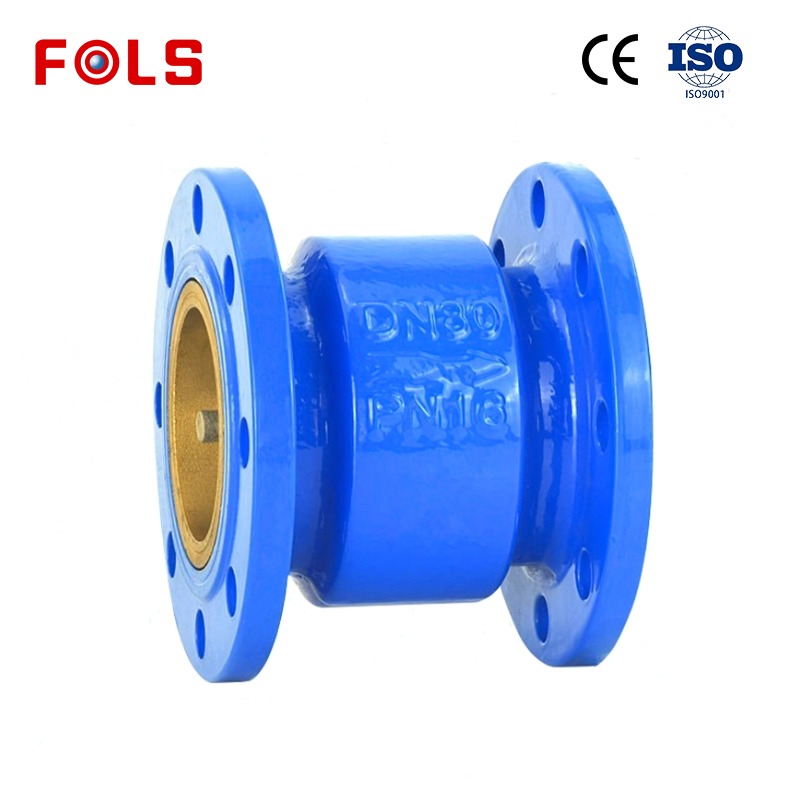
- Spring-assisted axial or silent check valve: a guided disc and spring can provide a shorter closing travel. This arrangement may be worth evaluating where reverse flow develops quickly, although the spring and internal geometry can add pressure loss.
- Ball check valve: a moving ball serves as the closure element. Some versions suit wastewater or fluids containing solids, subject to the manufacturer's limits on fluid, solids and orientation.
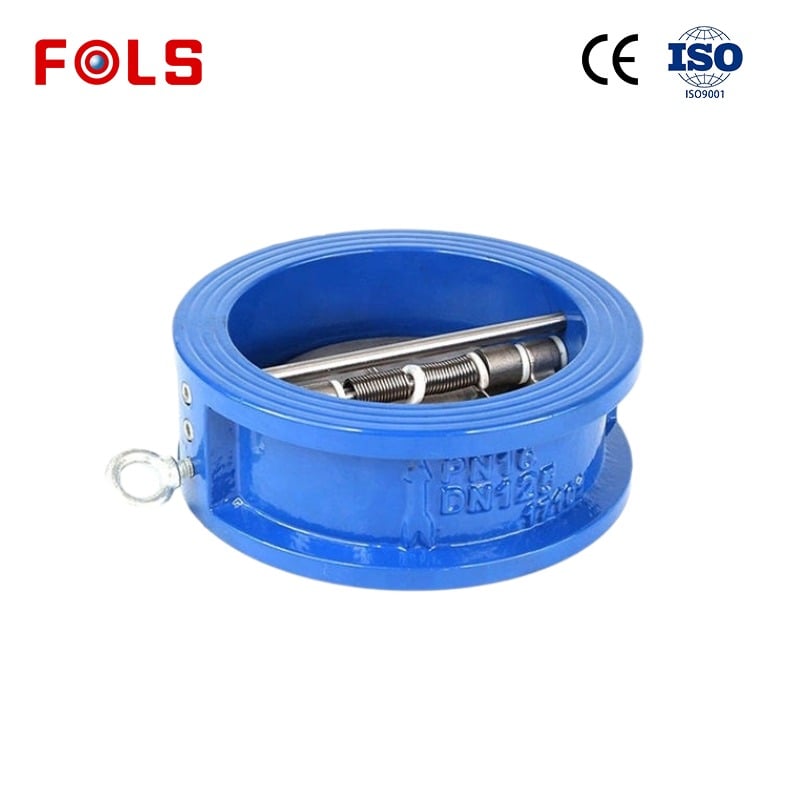
- Dual-plate check valve: two spring-assisted plates fold into the flow path. Compact installation can be useful where space is restricted; compatibility with mating flanges and adjacent piping still needs checking.
None of these descriptions makes a particular check valve suitable for every pump. A valve's pressure rating, sealing materials, opening characteristics and maintenance access need to match the duty. Check the manufacturer's documentation for the specific model rather than assuming every valve in a category behaves alike.
Size for the operating range, not just the pipe
Matching the pipe diameter is a starting point, not a complete sizing method. A check valve that is too large for the actual flow may not hold its disc steadily open. Repeated movement, often called chatter, can increase wear and noise. With a variable-speed pump, include the lowest sustained flow as well as the normal and maximum flows when discussing sizing.
Pressure loss matters too. Every check valve introduces resistance, and the loss varies with the design and operating flow. Ask for the relevant flow coefficient or pressure-loss curve and include it in the system calculation. The selection is a balance between stable operation, acceptable head loss and suitable closing behavior.
Also identify the liquid and any suspended solids, temperature range, normal and maximum pressures, connection standard and corrosion exposure. The valve body and seat materials must be compatible with those conditions. For applications involving pressure surges, the rating and system design need to account for more than steady operating pressure.
Installation and maintenance checks
A check valve commonly sits on the pump discharge, but its precise location should follow the pump and valve manufacturers' instructions and the piping design. Confirm the flow arrow, permitted horizontal or vertical orientation, support and any recommended straight-pipe lengths. Turbulence from a nearby elbow or pump outlet can affect valve operation; layout guidance is model-specific.
Provide a safe way to isolate and drain the section before inspection. A check valve is not an isolation valve: leakage across a closed seat may occur, and it should not be relied on as the sole barrier for maintenance. Follow the site's lockout and depressurization procedures, and use qualified personnel for work on the system.
During operation, listen for unusual chatter or repeated impacts, and investigate unexpected reverse rotation, pressure fluctuations or a line that drains after shutdown. These symptoms do not prove the check valve is faulty; debris on the seat, unsuitable flow conditions or another system issue may be involved. Inspect and test according to the equipment maker's instructions.
Where irrigation and multiple pumps change the decision
When comparing irrigation valve types, distinguish the check valve's automatic one-way role from the functions of isolation, pressure regulation and zone control. A check valve on a pump discharge may reduce return flow from the distribution line, but it is not automatically a code-compliant backflow protection assembly for a drinking-water connection. Local rules and the hazard assessment determine what additional protection is required.
In a shared discharge header, an idle pump may be exposed to pressure from another running pump. A check valve on each appropriate discharge branch can help limit reverse flow through the stopped unit. The engineer should review valve placement, leakage and transient interaction across the whole arrangement.
What to include in a valve inquiry
Before requesting a check valve recommendation, gather the pump's flow range, discharge pressures, fluid description, temperature, pipe size and connection details. Add the shutdown scenario, whether the line rises to a tank, available installation space and any observed noise or reverse rotation. If the system has multiple pumps or speed control, include those details too.
FOLS Valve works with industrial valve and control applications. Share the conditions and available drawings when discussing a check valve; confirm the proposed configuration, operating limits and supporting documentation before purchase. The aim is a valve that closes appropriately while remaining stable during normal flow.
 Hot News





