
 EN
What Are The Advantages Of Electric Butterfly Valve?
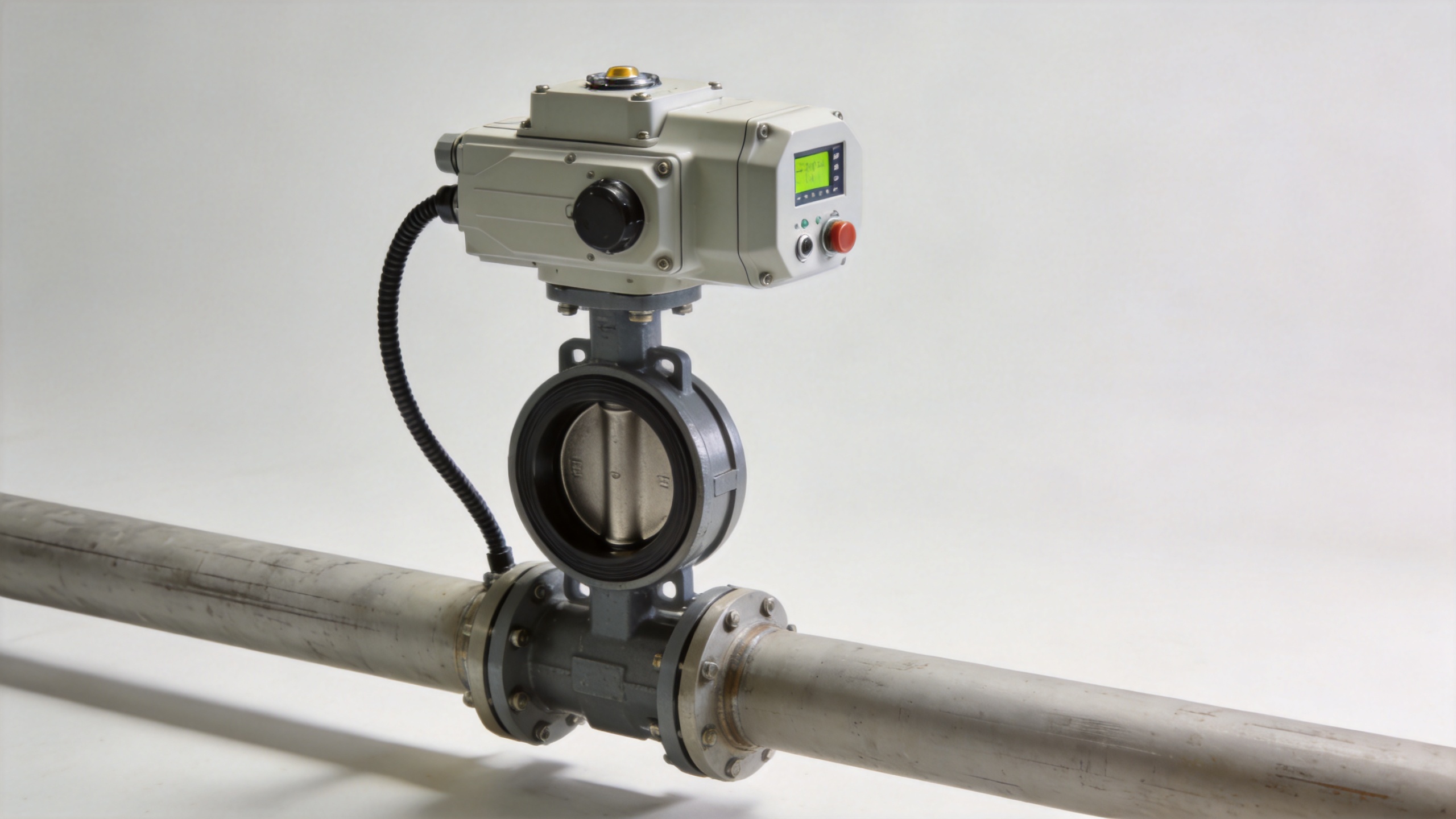
An Electric Butterfly Valve combines a quarter-turn butterfly valve with an electric actuator. The disc rotates inside the pipe to open, close, or position the flow path, while the actuator supplies the movement and can accept a control command. For industrial buyers, the more useful question is not whether an Electric Butterfly Valve is universally preferable. It is whether remote control, repeatable movement, and a compact valve-and-actuator package suit the medium, operating pattern, and control architecture of the line.
From an automation-control perspective, the valve body, actuator, power supply, signal connection, and feedback arrangement form one control chain. When those parts are matched, an Electric Butterfly Valve can make a piping task easier to operate and supervise. When they are not, adding an actuator does not fix an unsuitable valve body, seal, or torque requirement.
1. Remote operation without a manual trip to the valve
The clearest advantage of an Electric Butterfly Valve is that personnel can command valve movement from a suitable local panel or a connected control system rather than turning a hand lever at the line. This can be valuable where a valve is elevated, enclosed, distant from the operator, or part of a sequence that requires several devices to move in order.
Remote operation is not simply a convenience feature. It can support more consistent operating procedures when the process requires a defined open or closed response. The exact control arrangement still needs confirmation: on/off control, modulating control, signal type, manual override needs, and the required position feedback should be stated before a configuration is selected.
2. Repeatable quarter-turn movement
A butterfly valve is a quarter-turn device, so an Electric Butterfly Valve does not need multiple wheel turns to travel between its end positions. With an appropriately selected actuator, the opening and closing movement can be repeated according to the commanded control logic. That is useful for isolation duties, scheduled changes, and processes that benefit from repeatable positioning.
Repeatability does not mean every Electric Butterfly Valve is intended for every throttling task. If the application needs continuous or frequent modulation, the buyer should confirm the actuator duty rating, positioning method, torque margin, and the valve characteristic under the actual differential-pressure conditions. A nominal pipe size alone cannot answer those questions.
3. A compact option for many pipeline layouts
An Electric Butterfly Valve uses a disc within the flow path rather than a long linear-stem arrangement. In many piping layouts, this compact quarter-turn format can simplify space planning around the valve. The practical gain depends on the chosen actuator envelope, cable-entry direction, flange arrangement, and the room available for inspection or manual operation.
For that reason, assess the entire assembly rather than the valve body alone. An Electric Butterfly Valve may save space at the valve, but a poorly located actuator, junction box, or cable route can still create a maintenance problem. Before ordering, check whether the controls can be accessed safely and whether the installed position leaves room for service work.
4. Easier integration with automated flow-control routines
Where a plant already uses electrical control signals, an Electric Butterfly Valve can be integrated into operating sequences, alarms, or monitoring logic. It may be selected for water-treatment, building-services, oil, chemical, and other industrial lines where operators need a controllable isolation or flow-management point. The application statement should remain conditional: media compatibility, pressure, temperature, seal material, and electrical environment determine whether a particular configuration fits.
For example, a water line may prioritize remote isolation and simple status indication. A more demanding process may require a different control mode, material selection, or a closer review of torque under load. The advantage comes from matching the Electric Butterfly Valve to the control objective, not from treating electric actuation as a generic upgrade.
5. A clearer way to coordinate valve and actuator selection
Choosing an Electric Butterfly Valve forces a useful procurement conversation: what must the valve do, how often must it move, and what information must return to the operator? That structure can reduce ambiguity between the piping, electrical, and operations teams. Instead of purchasing a valve and an actuator as unrelated items, the buyer can define a single package around torque, supply voltage, travel time, control signal, feedback, fail-position expectations, and installation conditions.
FOLS Valve works with industrial valves, electric actuators, pneumatic valves, and automation discussions. For a project inquiry, the helpful starting point is a complete operating brief rather than a broad claim about performance. That allows the supplier and buyer to discuss configuration directions while keeping final suitability subject to the project data.
6. How the auxiliary valve terms fit into the decision
A penstock gate and an Electric Butterfly Valve solve different piping or water-control questions. A penstock gate is typically considered where a gate-style isolation arrangement is relevant, while a butterfly valve uses a rotating disc. They should not be treated as direct substitutes merely because both may appear in water-management projects. Flow path, installation arrangement, operating objective, and debris or solids conditions should be reviewed separately.
Likewise, a thermal balancing valve addresses a different control purpose from an Electric Butterfly Valve. In a thermal system, the buyer should distinguish between balancing requirements and the requirement for remotely commanded isolation or control. Separating those functions early helps avoid a valve name becoming a substitute for a complete system description.
7. Selection points that determine whether the advantages apply
The advantages of an Electric Butterfly Valve become meaningful only after the operating conditions are defined. Start with this checklist:
- Medium: Identify the fluid and note solids, corrosion, viscosity, or other properties that can affect the disc, seat, and materials.
- Pressure and temperature: Confirm normal and upset conditions rather than relying on a general service description.
- Valve duty: State whether the Electric Butterfly Valve will isolate, regulate, or cycle as part of a sequence.
- Torque and speed: Size the actuator for the valve and operating differential pressure, then check the required travel time.
- Electrical and control connection: Confirm supply voltage, control signal, feedback, enclosure needs, cable routing, and any manual override requirement.
- Installation and maintenance: Check orientation, access space, flange or connection details, and the ability to inspect the actuator.
Conclusion: use the advantage as a selection framework
An Electric Butterfly Valve can offer remote operation, repeatable quarter-turn movement, compact system planning, and a practical path into automated routines. Those advantages are strongest when the valve body and actuator are selected together for a defined duty. If the project is still at the early inquiry stage, collect the medium, line size, pressure, temperature, operating frequency, power supply, and control requirements first. That information makes it possible to evaluate an Electric Butterfly Valve on the conditions that actually matter.

 Hot News

