
 EN
What Makes Globe Valve Unique In Pipeline Design?
A pipeline may need more than an open-or-closed valve. When operators must adjust a flow rate, the choice affects control, pressure loss, actuator load, and maintenance access. A globe valve stands out because its movable closure element approaches a seat in a way that can regulate the flow area throughout its travel. The same internal geometry that supports regulation also makes resistance an important part of the design.
From a valve application perspective, start with the fluid, operating pressures and temperatures, and required control action. Only then compare valve types. A globe valve can be a useful candidate for throttling or isolation, but its suitability depends on the actual trim, materials, pressure class, and service conditions.
How the flow path changes the design
In a conventional globe valve, a stem moves a disc or plug toward or off a seat. As the opening changes, so does the area available for fluid to pass. The body commonly redirects flow through the seat rather than providing the straight passage seen in many fully open gate or ball valves. That change in direction contributes to pressure loss, even when the valve is open.
The tradeoff is worth examining at system level. In a cooling branch, for example, operators may value repeatable adjustment more than the lowest possible resistance. In a long transfer line with a limited pump head, an additional restriction could change the pump duty or reduce available flow. Neither outcome follows from the valve name alone: compare the manufacturer's flow data at the intended opening and operating conditions.
Why stem travel and trim matter
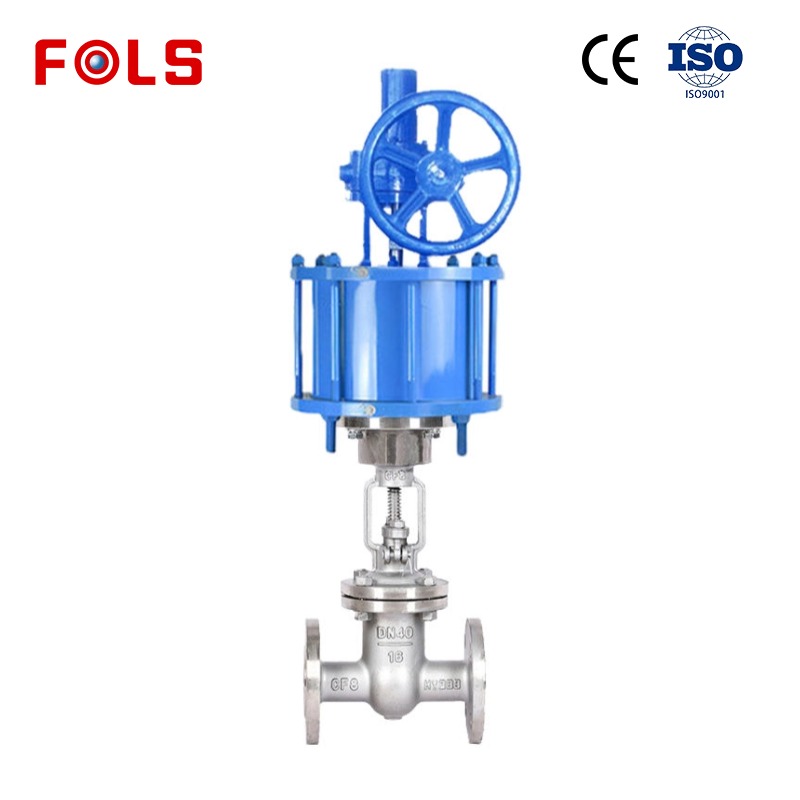
A globe valve uses linear stem motion. With suitable trim, incremental movement can produce a useful change in flow, making the design a common choice for regulating service. The shape of the plug and seat influences the relationship between travel and flow; different trim characteristics suit different processes. A handwheel may be adequate for occasional adjustment, while frequent automatic modulation can call for an actuator and a control signal.
Do not assume that every manual globe valve is a precision control valve. Ask for the relevant flow coefficient, travel characteristics, leakage requirements, and actuator documentation for the proposed assembly. For engineered control valves, IEC 60534-2-1 provides a sizing framework for liquid and gas service. The actual calculation must use the selected valve's data and the project's conditions.
Account for pressure drop before choosing a size
Line diameter alone is not a sizing calculation. Collect minimum, normal, and maximum flow; upstream and downstream pressure; fluid properties; and operating temperature. Then check the available pressure differential at each condition. Oversizing a globe valve can leave it operating close to its seat, where small changes in travel may have a large effect on the process. Undersizing can restrict the required flow.
For liquids, ask the supplier to assess cavitation and potential noise or erosion where pressure falls sharply. For steam or gas, consider compressibility and the possibility of choked flow. Pipe reducers, fittings, and the selected trim also affect the installed result. The final decision belongs to the qualified project engineer using the manufacturer's sizing information.
Flow direction, sealing, and maintenance space
Check the flow arrow and the manufacturer's installation instructions for the specific globe valve. Flow direction affects forces on the closure element and may affect shutoff, actuator sizing, and service behavior. Different designs and applications can call for different directions; a generic piping sketch is not a substitute for the supplied instructions.
Choose body, trim, packing, and seat materials for the fluid and temperature, including foreseeable cleaning or upset conditions. Define the required shutoff leakage separately from the need to throttle. A valve that controls flow acceptably is not automatically suitable for a specified isolation duty. Allow access for the handwheel or actuator, stem travel, packing inspection, and any bonnet removal required by the manufacturer's maintenance procedure.
Where does a globe valve fit beside other valves?
A gate valve is often considered for isolation where a relatively unobstructed open passage is important. A ball valve can offer compact quarter-turn operation, although suitability for regulation depends on its design. A globe valve gives the designer another option when controllable restriction is useful and the associated pressure loss is acceptable. Compare actual data rather than assigning a universal winner to a valve family.
Check valves have a different primary role: responding to flow or pressure differences to limit reverse flow. An ultra low cracking pressure check valve may be considered where forward differential is small, subject to its actual opening and stability requirements. A dual wafer check valve is another configuration for reverse-flow control. Neither should be assumed to replace a globe valve for deliberate modulation or reliable isolation; verify each device against its own duty.
Questions to include in a valve enquiry
- What fluid is present, including solids, corrosion concerns, and cleaning media?
- What are the minimum, normal, and maximum flow rates, pressures, and temperatures?
- Is the duty manual adjustment, automated modulation, isolation, or a combination?
- What pressure loss, leakage class, connection, and installation orientation are acceptable?
- What actuator supply, fail position, controls, and maintenance clearances are available?
Share these conditions with the supplier before selecting a globe valve. Guangzhou Fols Valve Technology works in industrial valves and automation; a specification discussion can connect the valve body, drive method, and control requirements. Confirm product availability, ratings, and documentation for the specific proposal rather than relying on a general description.
 Hot News





