
 EN
Why Pneumatic Butterfly Valve Excels In Fast Control?
A request for fast shutdown or frequent flow changes may appear straightforward. In practice, the valve, air supply, controls and piping all influence how quickly the process responds. A pneumatic butterfly valve can make that response practical because an air-powered rotary actuator moves a disc through a short stroke. The right selection still depends on the required response time, operating pressure and consequences of closing too quickly.
For an automation engineer or buyer, the useful question is not simply how fast the actuator turns. It is how long the complete control chain takes to respond under actual operating conditions, and whether the resulting flow change is safe for the system.
Why the short rotary stroke matters
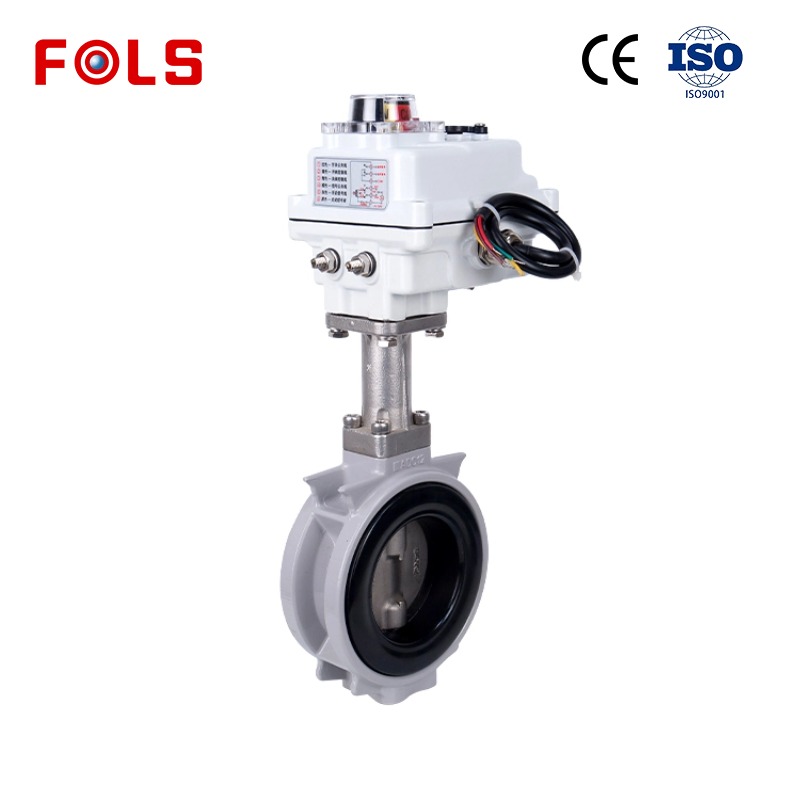
In a pneumatic butterfly valve, a disc rotates on a shaft inside the flow passage. Typical designs move from the closed position to the open position through approximately 90 degrees. A pneumatic actuator converts compressed-air energy into shaft rotation. The short angular travel avoids the long linear movement associated with some other valve mechanisms, making rapid on-off operation possible when the actuator and air circuit are sized for the duty.
That geometry does not establish a universal stroke time. Disc size, differential pressure, seat friction and actuator output all affect movement. Air line restrictions and the control valve also matter. Ask for a stroke time measured or calculated for the specified assembly and conditions, rather than treating a catalogue figure as a system-wide promise.
Follow the command from signal to flow
A pneumatic butterfly valve begins responding at the control signal, before the disc moves. A controller sends a command to a solenoid or other pneumatic control device. The device directs compressed air to the actuator, the actuator turns the shaft, and the disc changes the available flow area. End-position switches can report that an open or closed position has been reached; the feedback arrangement must be specified separately.
Each link adds delay. A long or narrow air line can restrict filling or exhausting the actuator chambers. Low available pressure can reduce output torque. A small solenoid valve may limit air flow, while a heavy disc load can slow the final part of travel. Measuring the time from the electrical command to verified valve position gives a more useful picture than quoting actuator movement alone.
On-off service and modulating service are different
For batch isolation or a timed transfer, the aim may be to move a pneumatic butterfly valve between two end positions. A properly selected solenoid and actuator can provide repeated remote switching. Confirm the number of operations, the air quality and the required feedback before specifying the assembly.
For continuous flow adjustment, a positioner and an appropriate control signal are typically needed to move and hold intermediate positions. Fast travel by itself does not ensure stable modulation: valve flow characteristics, control-loop tuning, friction and process dynamics also matter. If the process requires tight control across a particular flow range, ask the supplier and control engineer to verify the valve characteristic and sizing for that range.
Choose the actuator around the actual load
A pneumatic butterfly valve should be sized as a valve-and-actuator package. The actuator must provide enough torque throughout the stroke for the applicable differential pressure and temperature, including breakaway, running and seating requirements. Request the valve torque data and the actuator output curve at the minimum available air pressure. Include a project-appropriate margin agreed with the supplier; a single generic margin is not a substitute for engineering review.
Double-acting actuators use air for movement in both directions. Spring-return actuators use air in one direction and stored spring force for the return stroke. The latter can provide a defined fail position when supply air is lost, but the available spring torque changes through the stroke. Verify output at the relevant points in both directions, especially where seating or unseating torque is highest.
Loss of air, loss of electrical power and loss of the control signal are not necessarily the same event. Define the required open, closed or held position for each failure scenario, then confirm the solenoid, spring arrangement and any air reservoir or accessories against the site's safety design. A fail-safe designation does not by itself establish a closed position.
Fast is useful only when the piping can accept it
Closing a pneumatic butterfly valve too rapidly in a liquid line can create a transient pressure surge. The acceptable closing time depends on the fluid, line length, flow velocity and system layout. A speed-control device may help adjust actuator exhaust or supply flow, but it should be selected and set as part of an engineered system rather than used as an improvised safety measure.
Consider a hypothetical wastewater transfer line that needs remote isolation after a high-level signal. A quick closing command may reduce the duration of unwanted flow, while a harsh stop may stress the line. The project team should assess the transient, agree on a closing-time range and confirm the installed assembly under representative conditions. This is an illustrative scenario, not a claim about a completed installation.
Keep check valves and actuated valves in their proper roles
A check valve responds to flow and pressure differences to limit reverse flow; an actuated butterfly valve follows a control command. They can have complementary duties but are not interchangeable simply because their nominal sizes are similar. For example, a 1.5 check valve on a small branch and a 6 inch check valve on a main line need their own flow, pressure and connection checks. Neither size establishes the correct size or actuator torque for a pneumatic butterfly valve elsewhere in the system.
Where reverse flow and remote isolation are both concerns, assess each device in the context of the pump, pipework and operating sequence. Verify orientation, pressure loss and maintenance access rather than assuming that one component covers every function.
Information to include in an inquiry
Before requesting a pneumatic butterfly valve, gather the conditions that affect both speed and suitability. This reduces the chance of comparing quotations for different duties.
- Fluid composition, temperature range, solids content and material compatibility requirements.
- Line size, connection standard, normal and maximum pressures, and differential pressure during operation.
- On-off or modulating duty, cycle frequency, required end-to-end response and acceptable closing time.
- Minimum and normal air supply pressure, available air quality, tubing layout and control signal.
- Required position after air, power or signal loss; position feedback and any interlock requirements.
- Space for installation and servicing, requested documentation and any project-specific testing requirements.
Guangzhou Fols Valve Technology works in industrial valves and automation systems, so the inquiry can address the valve body and actuation together. Ask for the applicable drawings, torque and timing information for the proposed configuration, and verify them against the site requirements before ordering. A pneumatic butterfly valve is a useful fast-control option when its short stroke is matched to the air circuit and the process, not judged by speed alone.
 Hot News





