
 EN
Why Electric Butterfly Valve Is Ideal For Large Pipes?
Choosing a valve for a large pipeline is not simply a question of matching pipe diameter. The assembly must fit the available space, handle the actual pressure difference and work with the site's control system. An electric butterfly valve can be a practical choice when a wide line needs remote isolation or controlled flow, but its suitability depends on the medium, duty and required leakage class.
For an application engineer, the useful question is whether the valve body, seat and actuator will work together under the conditions the line will actually see.
Why the design suits many large lines
A butterfly valve uses a disc attached to a shaft. Turning the disc through a quarter turn changes its orientation to the flow: across the bore for closure and roughly parallel to the flow when open. An electric butterfly valve adds a motorized actuator to move that shaft in response to a local or remote command. The exact travel time and torque depend on the actuator and valve selected.
The body is often relatively short in the direction of the pipe compared with other valve arrangements. In a crowded chamber, this can leave more room for adjacent equipment and maintenance access. However, a compact body does not mean the whole assembly is small: allow for the actuator, wiring, supports and the space needed to remove the valve.
In a large bore, an electric butterfly valve also avoids requiring an operator to turn a large manual gear at each cycle. Remote operation may be useful when valves are distributed across a treatment plant or installed in difficult-to-access locations. Electrical supply, control wiring and a safe access route for inspection are still needed.
Flow capacity and pressure loss require calculation
The disc remains in the flow path when open. Therefore, an electric butterfly valve is not a full-bore opening, and the valve creates some pressure loss. The actual loss depends on the valve geometry, flow rate, fluid and installation. Ask for the manufacturer's flow coefficient or pressure-loss data at the relevant opening, then include it in the system calculation.
For on-off isolation, compare the open-valve loss with the allowable pressure budget. For modulation, consider the installed flow characteristic, the expected operating range and the effect of upstream and downstream pressure. A valve that works well as an isolator may not give the desired control near a nearly closed position. Cavitation, vibration or noise can arise in demanding liquid service; ask the supplier to assess the actual duty rather than assuming every disc and seat is suitable.
Match the actuator to the valve and the system
Actuator size is not determined by pipe diameter alone. An electric butterfly valve must develop enough torque to unseat, move and close the disc under the specified differential pressure. Seat friction, fluid forces, temperature, aging and any required margin matter. Request the valve manufacturer's torque data for the full operating range and select an actuator that meets it under the available supply conditions.
Decide whether the duty is simple open-close service or frequent positioning. A modulating electric butterfly valve needs a drive, control signal and duty rating suitable for repeated movement. Confirm the expected starts, operating cycle and feedback requirements; an actuator intended only for occasional isolation may not be appropriate for continuous regulation.
Power loss deserves its own review. An electric butterfly valve does not automatically move to a safe position when power disappears. Specify whether the process must remain in its last position, open or close, and verify any backup power, spring-return arrangement or manual override needed to achieve that response. Coordinate the choice with the site's safety review.
Large-pipe installation and operating checks
Before ordering an electric butterfly valve, confirm the pipe's nominal size, flange standard, pressure rating and face-to-face dimension. Verify that the disc can clear the adjacent pipe and fittings throughout its travel. Where reducers, pumps or bends are nearby, follow the valve manufacturer's installation guidance and assess flow disturbances for the specific layout.
Large assemblies may need independent support and a planned lifting method. Check actuator orientation, enclosure protection, cable entry and available maintenance clearance. Avoid using the actuator as a lifting point unless the manufacturer expressly permits it. During commissioning, verify travel limits, direction of rotation, feedback and the response to a loss of the control signal.
Closing time also affects the pipeline. Rapid closure can contribute to pressure transients in liquid systems, while an excessively slow cycle may fail to meet the process requirement. Establish an acceptable travel time through a system-level transient assessment; then verify that the selected actuator can deliver it under load.
When a different valve may be preferable
An electric butterfly valve is not the automatic answer for every large pipe. The disc obstructs the bore, so a process requiring unrestricted passage, scraping or pigging may need a different design. High differential pressure, severe erosion, difficult sealing requirements or tight control over a narrow flow range can also change the selection. Ask for application-specific data rather than treating all butterfly valves as interchangeable.
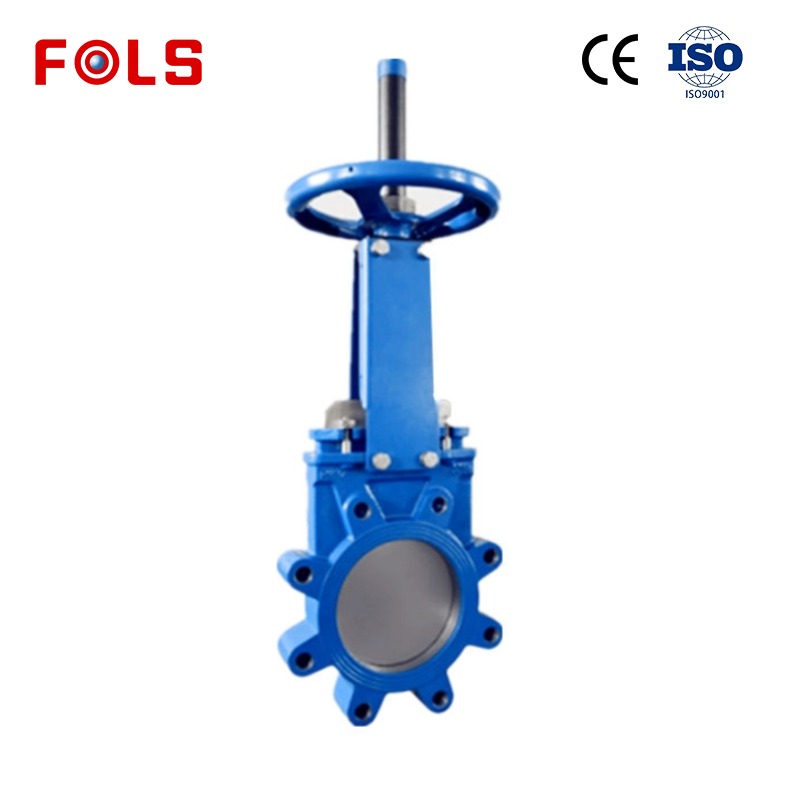
A knife gate valve may be considered for certain slurry or solids-bearing isolation duties where the design is compatible with the medium. Check its pressure rating, seat arrangement, leakage performance and actuation options for the actual service; not every knife gate design is suitable for every slurry. Its flow-control behavior and installation envelope should be assessed separately.
A brass gate valve may be relevant to a smaller compatible service line, but its body material, pressure-temperature limits and available size must be checked against the duty. It is not a direct substitute for a large automated assembly merely because both can isolate flow. Compare the complete installed arrangements and maintenance needs, not just valve names.
A practical specification checklist
To obtain a meaningful quotation for an electric butterfly valve, give the supplier enough information to assess both the valve and actuator. Start with the items below, then add site-specific requirements.
- Process: medium, solids content, normal and maximum temperatures, inlet and outlet pressures, flow range and required shutoff performance.
- Pipeline: nominal size, flange details, mounting orientation, adjacent fittings, available space and support arrangements.
- Control: on-off or modulating duty, operating frequency, supply voltage, command signal, position feedback and required travel time.
- Failure response: required position on power loss, override needs and any site safety requirements.
- Documentation: applicable material compatibility, pressure-temperature limits, torque curve, flow data and requested test records for the proposed configuration.
For water distribution, drainage or industrial process lines, the decision comes down to the relationship between the valve and the whole installation. An electric butterfly valve can combine a relatively compact body with remote operation, provided the disc, seat and actuator are matched to the duty. FOLS Valve works in industrial valves and automation; discuss the actual process conditions and document the selection before committing to a configuration.
 Hot News





