
 EN
Pneumatic Butterfly Valve Applications In Power Plants
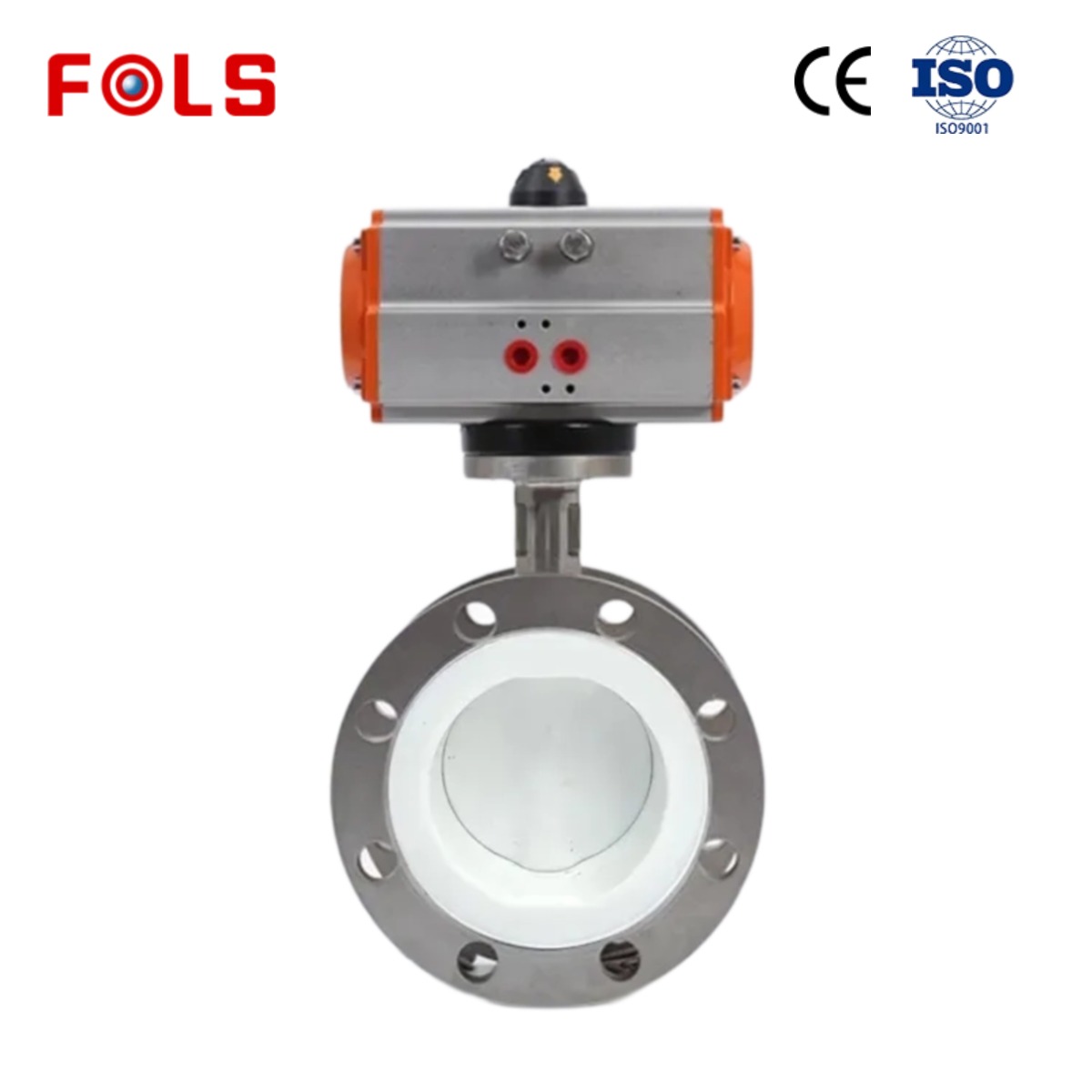
A cooling-water branch may need to close from the control room, yet the same closure can change pressure across the rest of the piping network. That is why selecting a Pneumatic Butterfly Valve for a power plant starts with the whole control loop, not simply the valve diameter. The disc, seat, actuator, air supply and shutdown logic all have to work under the conditions at that location.
These valves use compressed air to turn a disc through a quarter turn. Depending on the package, the valve can provide remote isolation or controlled flow. Whether it belongs in a particular line depends on the fluid, pressure, temperature, required leakage rate and consequence of a loss of air. The following application examples are illustrative, not claims about a specific installation.
Cooling-water circuits: isolate without upsetting the network
A Pneumatic Butterfly Valve can be considered for isolating a cooling-water branch serving a heat exchanger or auxiliary system. Remote actuation is useful when operators must switch between parallel equipment or bring a branch out of service. The piping team should establish the normal and maximum differential pressure across the closed disc, including abnormal operating cases, before sizing the actuator.
Water quality matters as much as the control signal. Suspended solids, biological growth, treatment chemicals and salt content can affect the body, disc and seat. A valve suitable for treated fresh water is not automatically suitable for seawater. Ask for wetted-material compatibility and inspection access to be checked against the actual water analysis.
Stroke time needs its own review. Rapid closure can produce pressure waves in a long water line. A Pneumatic Butterfly Valve may therefore need a controlled closing speed, subject to a transient assessment and the plant's shutdown requirements. A slow stroke is not automatically safe either: the required process isolation time still has to be met.
Water treatment and auxiliary services
Power stations often have water treatment, service-water and drainage systems alongside the main generating equipment. In an appropriate treatment-water line, a Pneumatic Butterfly Valve can provide automated branch isolation for an operating sequence. The designer should verify chemical compatibility across the full concentration and temperature range, including cleaning cycles, rather than assuming that a nominal process-water description covers every exposure.
For a filter backwash arrangement, the sequence may direct flow through different paths at different times. Check the position feedback and interlocks against the process diagram: a valve position command is not the same thing as proof that the valve reached its end position. Consider how the system behaves during a power interruption, a loss of instrument air or maintenance of a solenoid.
Wastewater and solids-bearing services need extra care. The plant should review solids size, settling, abrasion, flushing arrangements and the risk of deposits around the seat. For severe slurry or fouling duties, another valve design may be more appropriate. The service owner and valve supplier should compare the alternatives against actual operating data.
Air and gas paths: check leakage and duty first
Some plant auxiliary air or nonhazardous gas services may use a Pneumatic Butterfly Valve where the body, seat and actuator are rated for the service. A low-pressure ventilation branch and a pressurized process-gas line are not interchangeable specifications. Confirm the medium, operating envelope, permissible leakage and applicable plant requirements before selecting a valve.
For hot gas, temperature affects both the wetted materials and components outside the pipe. Keep the actuator and accessories within their specified ambient limits, and account for insulation and mounting arrangements. Safety-critical or hazardous-gas isolation requires a separate engineered assessment; a general-purpose butterfly valve should not be assumed suitable.
Match the actuator to the real operating case
Actuator torque is not determined by pipe size alone. A Pneumatic Butterfly Valve must have sufficient output for the valve's required torque throughout the stroke, including seating and unseating at the specified differential pressure. The supplier should use the valve manufacturer's torque data, the minimum available air pressure and the project margin. For spring-return units, check available spring torque at the relevant points in the stroke as well.
Single-acting spring-return actuators use a spring to move to a configured position when air is lost. Double-acting actuators use air for both directions and do not inherently provide the same spring-return action. The safe position might be open, closed or another engineered response depending on the process; it must be established by the plant hazard review rather than selected by habit.
For modulating duty, confirm that the Pneumatic Butterfly Valve assembly, positioner and control signal are intended for the required operating range and cycling. Disc geometry and flow behavior can make very low openings difficult to control accurately. If the duty requires tight regulation across a wide range, compare other control-valve options using the process design data.
Coordinate isolation with check valves
A Pneumatic Butterfly Valve and a check valve do different jobs. The first receives an operating command; a check valve responds to flow and differential pressure to restrict reverse flow. A silent check valve may be considered near a pump where the system design calls for reduced closing impact. Its suitability still depends on fluid conditions, installation layout and the supplier's data; the name alone does not establish the actual pressure transient.
A pilot operated check valve is another distinct device: pilot pressure controls its opening behavior according to its design. It is commonly associated with hydraulic circuits and should not be treated as a drop-in substitute for a cooling-water line check valve. Confirm the circuit, pressure range and control function before comparing it with either a silent check valve or a Pneumatic Butterfly Valve.
A practical specification for an inquiry
Before requesting a Pneumatic Butterfly Valve, bring process, mechanical and controls staff together around the same service description. An inquiry that includes the items below gives a supplier a clearer basis for a technical review.
- Fluid and pipe: medium composition, solids, pipe size, connection type, available space and flow direction.
- Operating envelope: normal and maximum pressure, differential pressure, temperature, flow and anticipated cycling.
- Isolation and control: on/off or modulating duty, leakage requirement, stroke time and shutdown sequence.
- Actuation: minimum and normal instrument-air pressure, air quality, loss-of-air position and any stored-air provisions.
- Signals and installation: control voltage, position indication, enclosure environment, accessibility and maintenance arrangements.
- Verification: applicable project codes, material records, inspection requirements and documentation requested from the supplier.
For example, a hypothetical cooling branch may require remote isolation during exchanger maintenance while the adjacent branch stays in service. The team would first define the isolation boundary and required leakage rate, then check differential pressure, actuator torque and closing time against the water network. Only after those checks should the assembly be specified. Plant procedures govern isolation, depressurization and any work on the line.
From application to a workable valve package
The most useful Pneumatic Butterfly Valve specification connects service conditions to the operating sequence and the maintenance plan. Cooling water, treatment lines and auxiliary air can each present different material and control requirements, even within one site. Review the broader discussion of pneumatic butterfly valves in power plants, then assemble the site data for a project-specific discussion with FOLS Valve. A supplier review supports the decision; it does not replace the plant engineer's approval.
 Hot News





