
 EN
What Makes Pneumatic Ball Valve Perfect For Refineries?
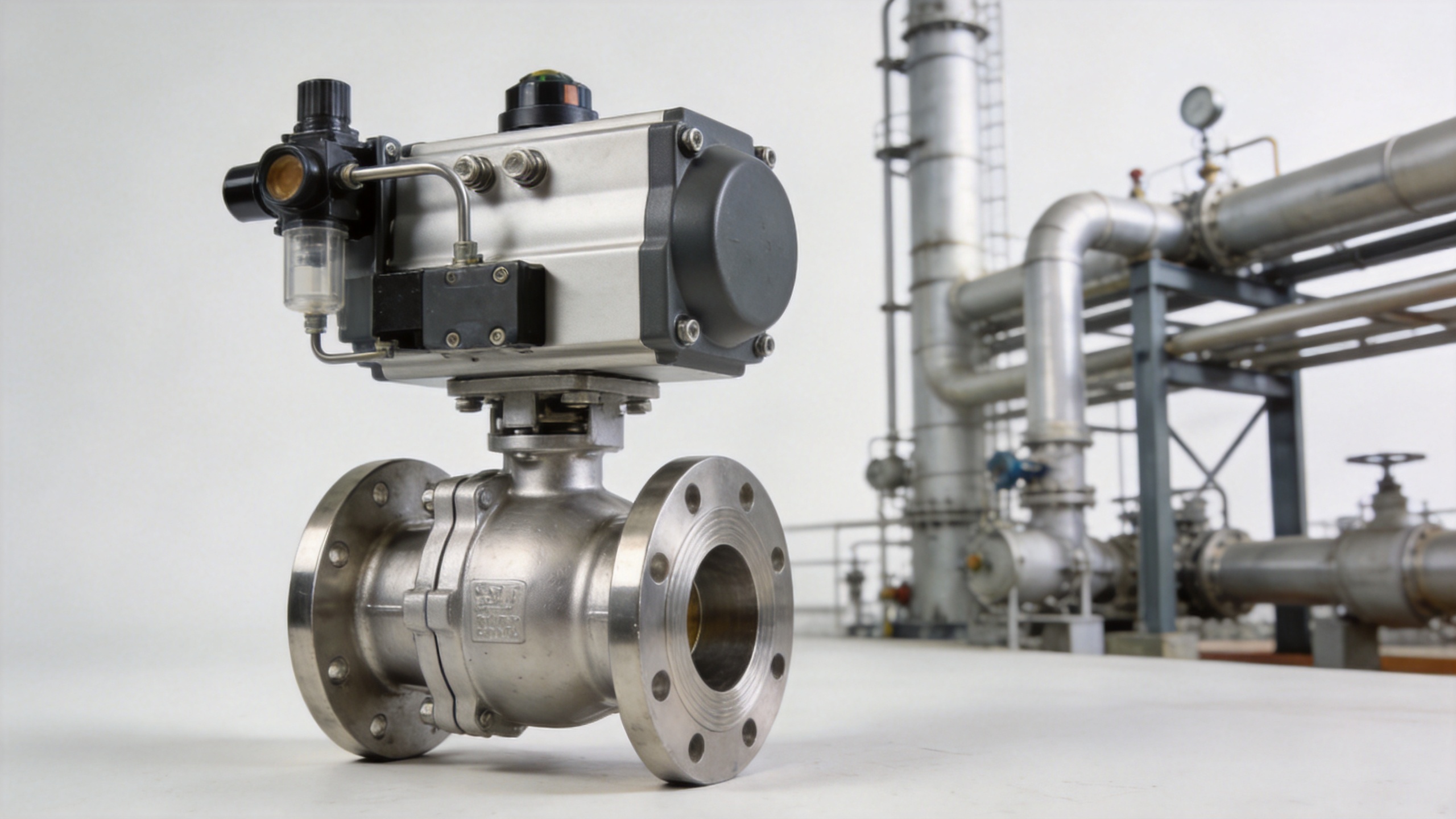
In a refinery, an isolation valve is rarely judged by the valve body alone. Operations teams look at how quickly a line can be isolated, what happens when instrument air is interrupted, whether the materials suit the process medium, and how readily technicians can inspect the assembly during a shutdown. A Pneumatic Ball Valve can be a practical answer when those questions point toward automated quarter-turn isolation. It is not a universal answer for every service, but its compact motion and straightforward control architecture make it useful across many refinery utility and process duties.
From an engineering review perspective, the useful question is not “Is a Pneumatic Ball Valve good?” It is “Can the valve body, seat, actuator, air supply, accessories, and test requirements work together for this specific line?” That distinction keeps a purchase discussion grounded in duty conditions rather than catalogue language.
Why quarter-turn isolation fits refinery workflows
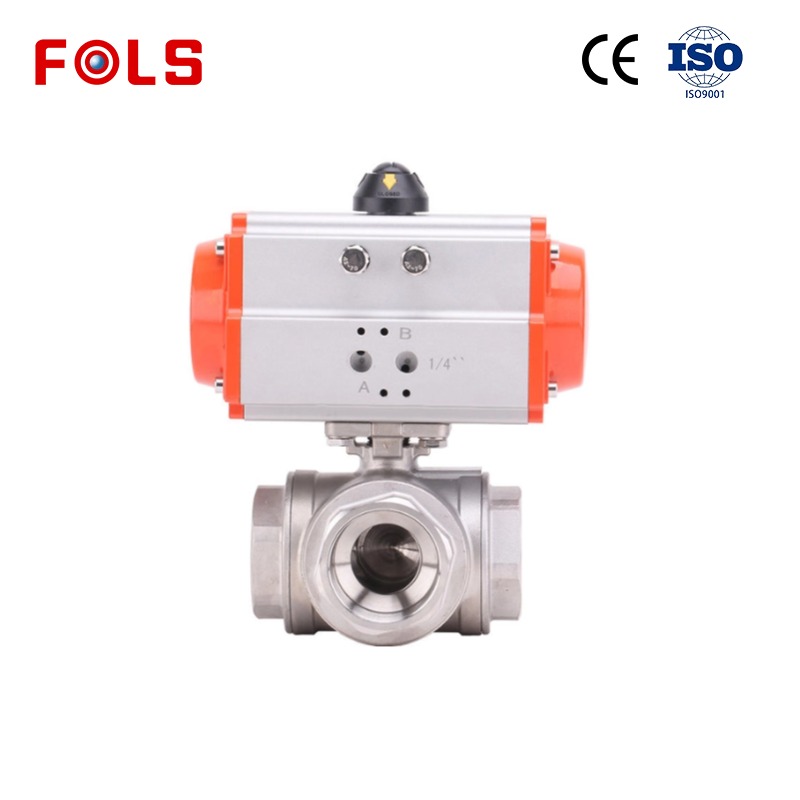
A Pneumatic Ball Valve uses compressed air to turn a bored ball between open and closed positions. The short rotary travel supports fast on/off action where a refinery needs repeatable isolation, sequencing, or remote operation. Compared with a manually operated valve, a pneumatic assembly can be connected to a control system through a solenoid, limit switches, position feedback, and suitably selected air-treatment components.
This arrangement is particularly relevant where operators should not need to approach a hot, elevated, noisy, or restricted-access location for every operating change. Remote operation can support normal sequencing and response procedures, provided the plant has defined the required fail position and has confirmed that the pneumatic circuit behaves as intended during loss of air or loss of electrical signal.
The refinery advantages that need engineering context
Fast action is useful when the whole loop is designed for it
The appeal of a Pneumatic Ball Valve is often its fast quarter-turn movement. Yet cycle time should be selected with the piping system in mind. Closing too quickly can contribute to pressure surges, while a slow response may not meet the operating sequence. Engineers should consider actuator torque, available air pressure, stroking controls, valve size, media characteristics, and the required shutdown philosophy together.
For isolation duty, a double-acting actuator generally uses air for both directions. A spring-return actuator drives the valve toward a designated position when the control air is removed. Neither approach is automatically right: the safe position depends on the consequence of stopping or continuing flow in that line.
Simple automation can make field work more manageable
Because a Pneumatic Ball Valve can use a compact actuator and a discrete control signal, it can be integrated into a plant automation design without adding a motor at every valve point. The actual installation still needs access for manual override, visual indication, tubing inspection, and actuator removal. A maintainable layout matters as much as the actuation method when turnaround time is limited.
The solenoid valve is a small component with an outsized role. A properly specified solenoid valve coil must match the site electrical classification, supply voltage, enclosure expectations, ambient conditions, and control philosophy. It should be considered part of the valve package review, not an afterthought purchased independently.
Ball-valve geometry can suit clean, rapid isolation duties
With the correct body construction, end connection, seat design, and materials, a Pneumatic Ball Valve can be evaluated for many liquid and gas isolation duties. Full-port arrangements may be considered when pressure loss, pigging, or flow capacity is important; reduced-port designs can be appropriate when the process calculation permits them. The choice must come from the line class and operating data, not from a general preference for one bore style.
Selection starts with the process, not the actuator
Refinery service places several details on the same review sheet. Start with the medium, normal and upset pressure and temperature, flow direction, solids or deposits, required shutoff performance, pipe connection, and corrosion allowance. Then evaluate the ball valve construction and seat system. A Pneumatic Ball Valve that appears suitable for a utility line may need a different material combination for hydrocarbon, sour, low-temperature, or chemically aggressive duty.
Low-temperature service deserves its own engineering check. A cryogenic solenoid valve should not be treated as a generic accessory merely because its name is similar to a standard pneumatic control valve. When cryogenic conditions are involved, the operating temperature range, seal materials, electrical parts, mounting arrangement, and validation requirements need review as a complete control assembly. The same care applies to the ball valve stem, packing, seats, and body design.
A practical refinery selection checklist
- Define the duty: identify the medium, operating envelope, pressure class, temperature range, required cycle frequency, and whether the valve is isolation or part of a defined sequence.
- Set the fail position: document whether the line should fail open, fail closed, or stay in its last position, then select double-acting or spring-return action accordingly.
- Verify torque margins: calculate required breakaway and running torque across the expected pressure, temperature, seat friction, and service conditions rather than sizing from nominal valve diameter alone.
- Review air quality and availability: confirm air pressure, filtration, moisture control, tubing routing, and the effect of supply loss on the selected Pneumatic Ball Valve.
- Specify the control package: check the solenoid valve coil, manual override, position indication, feedback signals, and enclosure requirements against the plant control and electrical documentation.
- Confirm testing and documentation: align inspection, pressure testing, material records, and purchaser documentation with the project specification. API 598 is commonly referenced for inspection and pressure-test requirements for ball valves, while API 6D may be relevant where the pipeline application and specification call for it.
Commissioning is where the valve becomes a system
Before placing a Pneumatic Ball Valve into service, the commissioning team should prove the control logic, air connections, travel direction, fail action, feedback indication, and accessible manual override. A stroke test should be performed under the approved procedure, with attention to abnormal signal or air-loss conditions. This is also the right time to verify that the valve tag, actuator label, solenoid valve coil, tubing identifiers, and control drawings refer to the same assembly.
Maintenance planning should include periodic checks for air leakage, loose fittings, water contamination, damaged cable entries, and drifting position feedback. The service interval should reflect actual cycles and conditions. A valve that cycles infrequently in a sheltered utility area does not face the same exposure as one installed near a demanding process unit.
When a Pneumatic Ball Valve may not be the preferred choice
A Pneumatic Ball Valve is not automatically suitable where throttling accuracy is the primary requirement, where severe solids threaten seat damage, or where the process needs a purpose-designed valve geometry. It may also be a poor fit if reliable instrument air is unavailable. In these cases, the engineering team should compare the duty against alternatives rather than forcing a quarter-turn isolator into a mismatched role.
Turn a product request into a reliable valve package
The value of a Pneumatic Ball Valve in refinery service comes from coordinated selection: a valve body suited to the medium, actuator torque suited to the operating case, a fail action that reflects the process hazard, and accessories that fit the plant's air, electrical, and maintenance practices. FOLS Valve supports industrial discussions around pneumatic valves and automated control systems. For a meaningful technical review, provide the line medium, pressure and temperature range, size and connection, desired fail position, air supply details, and required documents. That information allows the conversation to focus on fit-for-duty configuration rather than broad claims.
 Hot News





