
 EN
Where Should Electric Butterfly Valve Be Integrated?
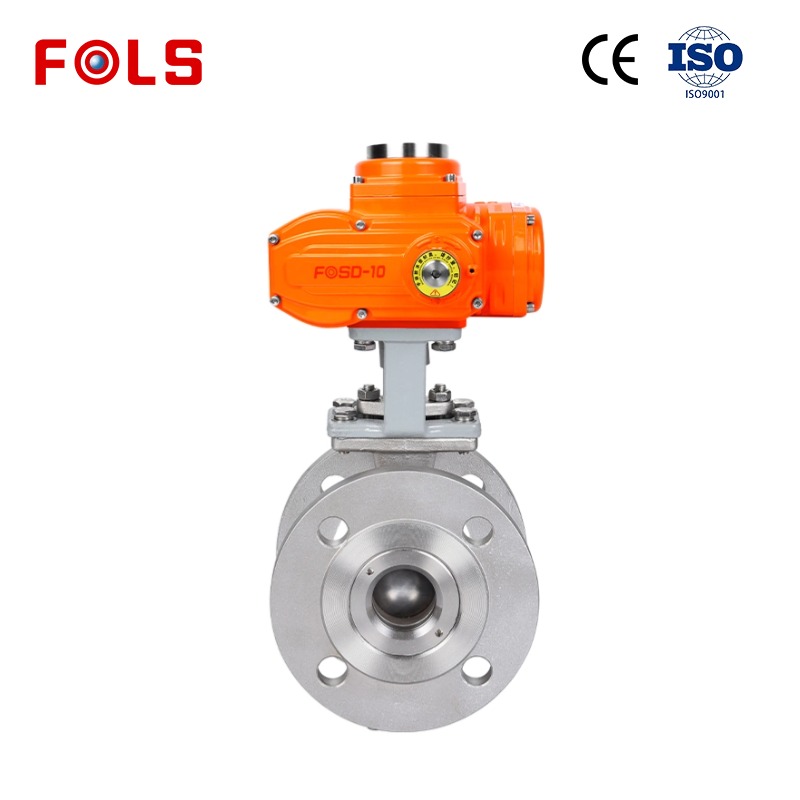
An Electric Butterfly Valve belongs where a piping system needs quarter-turn isolation or controlled flow without sending an operator to every valve location. The useful question is not simply whether an Electric Butterfly Valve can fit in a line. It is whether the valve body, actuator, power supply, signal path, and maintenance conditions fit the same operating duty.
From an automation-control viewpoint, an Electric Butterfly Valve is a chain rather than a single component: the disc manages the flow path, the actuator supplies motion, and the control system tells that actuator when and how to move. Industrial search results commonly associate actuated butterfly valves with water treatment, HVAC, process piping, manufacturing, and utility service. Those categories are a starting point, not a substitute for confirming media, pressure, temperature, sealing, and control requirements.
Start with the control job, not the valve name
A butterfly valve uses a rotating disc to shut off or regulate flow. Adding an electric actuator makes remote operation, scheduled movement, and integration with a controller possible. This makes an Electric Butterfly Valve relevant when a manual lever or gearbox would create an operational gap: a valve may be elevated, enclosed, distributed across a large facility, or expected to respond to a control-room command.
Do not begin by asking which valve is better. First write down the medium, line size, pressure-temperature envelope, required action, and operating frequency. A single pressure figure matters, but its relationship to the pipeline, seat, disc, and actuator is what determines whether an Electric Butterfly Valve is a sensible candidate.
Water and wastewater systems
Water-treatment and wastewater lines are common places to evaluate an Electric Butterfly Valve, especially where operators need remote isolation of process zones, tanks, filter trains, or distribution branches. The compact quarter-turn motion can suit repetitive positioning tasks when the selected valve and actuator duty ratings match the actual cycle demand.
For these applications, confirm water quality, suspended solids, chemical dosing exposure, seat compatibility, and whether the desired action is simple open-close or modulating control. If a line must remain operable during a power interruption, the required fail position and any backup strategy should be part of the control design. An actuator is not automatically a fail-safe device; the intended response needs to be specified.
HVAC and building-service piping
In chilled-water, condenser-water, heating-water, and other building-service loops, an Electric Butterfly Valve can be considered where a building-management signal must isolate a branch or coordinate equipment sequencing. Remote control can simplify the operating routine, but it does not turn every butterfly valve into a balancing device.
This distinction matters when a thermostatic balancing valve is also discussed. A thermostatic balancing valve is used to respond to temperature-related distribution conditions in suitable systems; it has a different function from an Electric Butterfly Valve. Where stable hydraulic balance is the objective, identify the control philosophy first. Where commanded isolation or automated valve movement is the objective, then assess the electric actuator, feedback signal, and required position.

Process, chemical, and utility lines
Process installations may integrate an Electric Butterfly Valve for remote isolation, batch routing, or controlled movement in utility and production piping. The application must be evaluated more carefully when media are corrosive, abrasive, viscous, high-temperature, or prone to deposits. “Electric” describes the actuation method; it does not establish the suitability of the wetted materials, seat, shaft, or disc for a process medium.
Ask for the medium description and concentration, normal and upset temperature, pressure range, connection standard, and expected cycling duty. Then check breakaway torque under the relevant conditions rather than choosing an actuator only from nominal pipe size. The enclosure protection appropriate to the installation environment, available supply voltage, control signal, and manual override access also deserve confirmation before an Electric Butterfly Valve is integrated.
When it is not the same job as a vacuum gate valve
A vacuum gate valve should not be treated as a substitute merely because both products can isolate a path. Vacuum service introduces different leakage, material, motion, and process requirements. A vacuum gate valve is selected around the needs of a vacuum chamber or vacuum line; an Electric Butterfly Valve is generally considered around conventional piping control and its associated media and operating conditions.
That comparison is useful because it prevents a common specification error: selecting from a familiar valve category before defining the system boundary. If the application involves vacuum integrity, specify the vacuum conditions and seek a valve designed for that duty. If the application is a process or utility pipe that needs automated quarter-turn operation, an Electric Butterfly Valve may be the more relevant path after the usual compatibility checks.
Integrating the actuator with the control system
The integration work begins before installation. An Electric Butterfly Valve should be matched to the command method—such as on-off control or a modulating signal—and to the feedback the system needs. Confirm voltage, wiring route, terminal arrangement, travel indication, control connection, and whether the automation logic requires a defined position after alarm or power loss.
Think of the valve as part of a control loop. The actuator may have adequate torque yet still be awkward to service, exposed to unsuitable ambient conditions, or unable to communicate the position needed by the controller. In procurement discussions, a clear list of media, size, pressure-temperature conditions, valve materials, control signal, power supply, duty cycle, enclosure expectation, and fail-position requirement reduces rework later.
A practical integration checklist
- Define whether the duty is isolation, modulation, sequencing, or emergency response.
- Verify the media and operating envelope against the valve-body and sealing materials.
- Establish required torque under actual operating conditions and select the actuator accordingly.
- Confirm power availability, control signal, position feedback, and cable-routing constraints.
- Check access for manual operation, inspection, and replacement.
- Keep a thermostatic balancing valve or a vacuum gate valve in its own functional category instead of forcing a like-for-like comparison.
Make the integration decision conditionally
An Electric Butterfly Valve is most useful when the piping duty and the automation duty point in the same direction: a compatible medium, a reasonable quarter-turn valve function, a need for remote or programmed movement, and a control architecture that can support the actuator. It may be less appropriate when the core requirement is vacuum isolation designed for that service, temperature-driven balancing, or a duty that conflicts with the available materials or actuator configuration.
Before requesting a final configuration, prepare a concise application sheet. Include the medium, nominal size, pressure, temperature, connection, desired valve action, operating frequency, power supply, command signal, feedback requirement, environment, and any preferred fail position. That information turns the question of where to integrate an Electric Butterfly Valve into a reviewable engineering decision rather than a product-name comparison.
 Hot News





