 EN

Where To Apply Pneumatic Butterfly Valve For Fast Control?
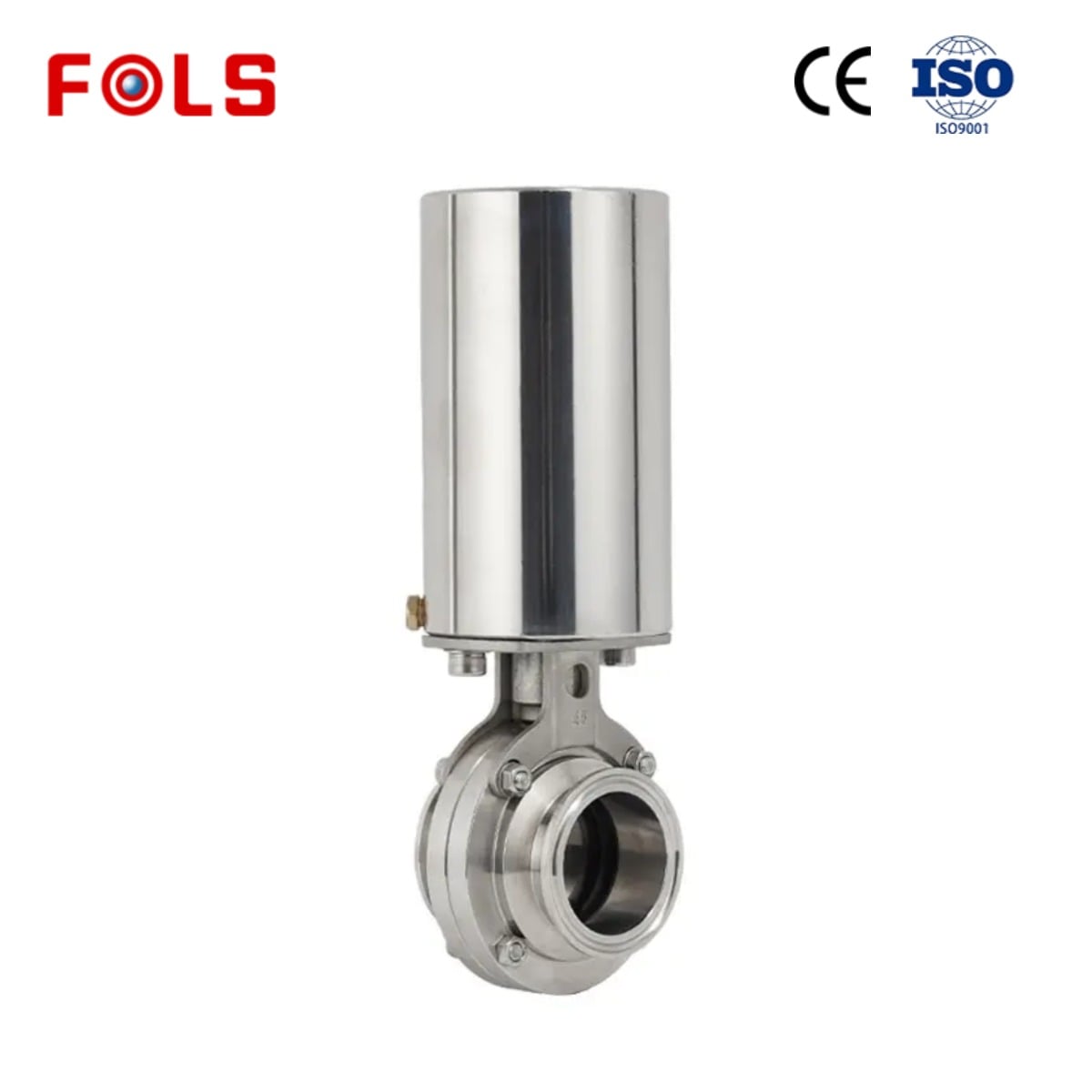
A Pneumatic Butterfly Valve is worth considering when a pipeline needs repeatable quarter-turn movement and the site already has a suitable compressed-air arrangement. From an automation-control viewpoint, the decision is not only about the valve body. The disc, actuator, air supply, solenoid, signal signal connection, feedback requirement, and chosen fail position must work as one control chain. A Pneumatic Butterfly Valve can support rapid isolation or a defined control action, but suitability still depends on the medium, pressure, temperature, line size, sealing requirements, and operating routine.
Do not start by asking whether one valve type is better in every case. Start with the process duty: does the line need frequent open-close cycles, staged flow adjustment, an emergency response, or a valve that holds a selected position? That distinction makes a Pneumatic Butterfly Valve easier to assess. It also keeps a buyer from treating a fast actuator as proof that the whole installation is appropriate.
Why a Pneumatic Butterfly Valve suits fast-control duties
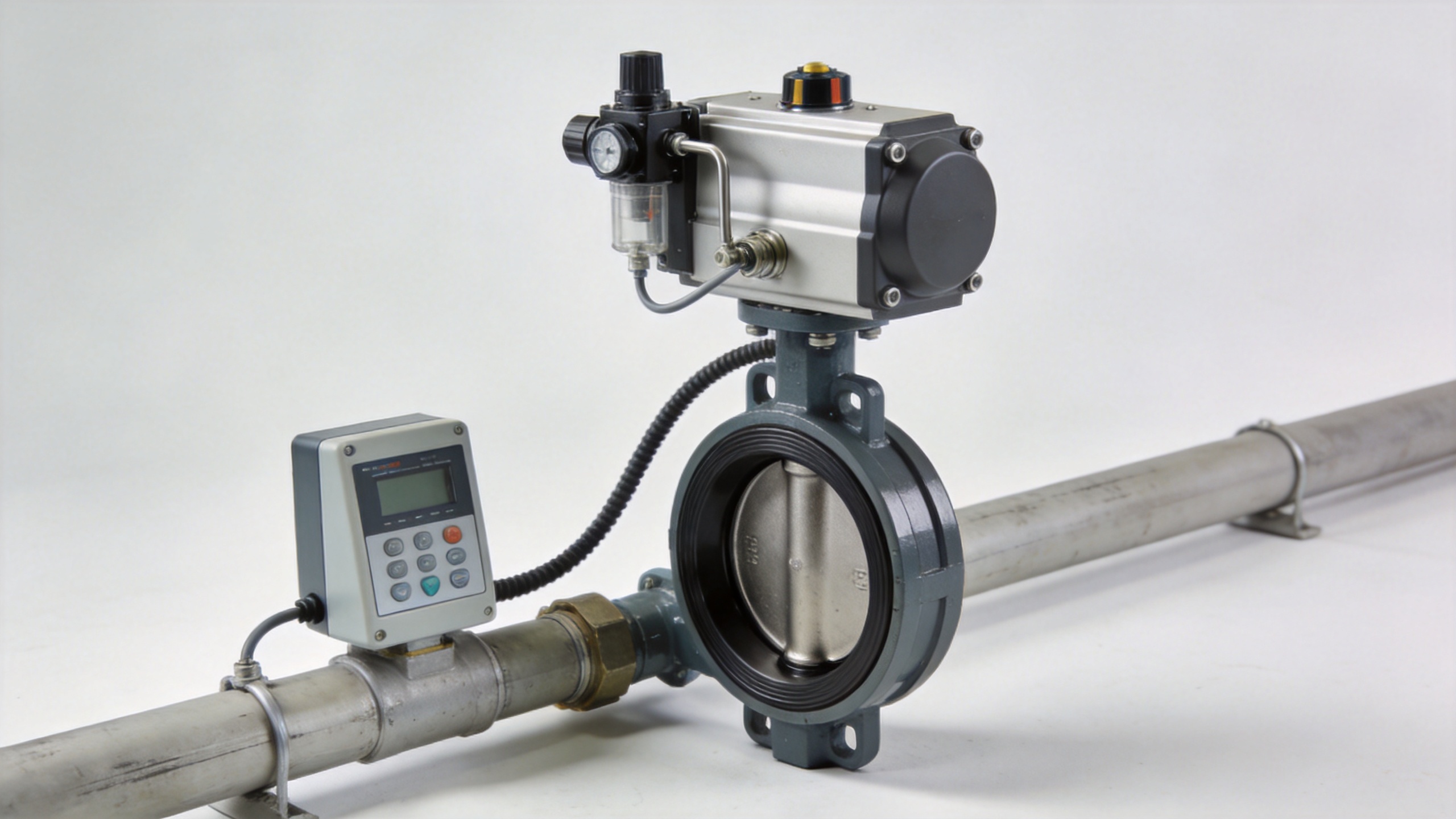
The basic motion is simple: compressed air drives an actuator, which turns the disc through a quarter turn. For on/off work, this short travel is often a practical reason to evaluate a Pneumatic Butterfly Valve. The control system can send a command through a solenoid arrangement, and feedback can be considered where the system needs to confirm actual valve position. More accurately, fast movement alone is not the design target; the desired response, available air quality, torque requirement, and permitted process disturbance need to be confirmed together.
A Pneumatic Butterfly Valve is commonly reviewed for automated lines where manual access is inconvenient, where operations are repeated, or where a remote signal is part of the operating sequence. In a compact piping layout, the valve’s quarter-turn action can also make it a sensible candidate for comparison. That said, a Pneumatic Butterfly Valve should not be selected from name recognition alone. Disc clearance, body style, connection, material, seat compatibility, and installation space remain relevant.
Applications where fast isolation may matter
Water treatment and wastewater transfer
Water treatment and wastewater systems may use a Pneumatic Butterfly Valve for zone isolation, tank switching, bypass routing, or automatic sequencing when the actual fluid conditions and solids content are evaluated. In these systems, the valve should be discussed alongside the pipe layout, the expected cycling pattern, and the control logic. Guangzhou Fols Valve Technology Co., Ltd. describes industrial valves, pneumatic valves, actuators, and automation for sectors that include water treatment; a configuration discussion should still be based on the project’s actual medium and requirements.
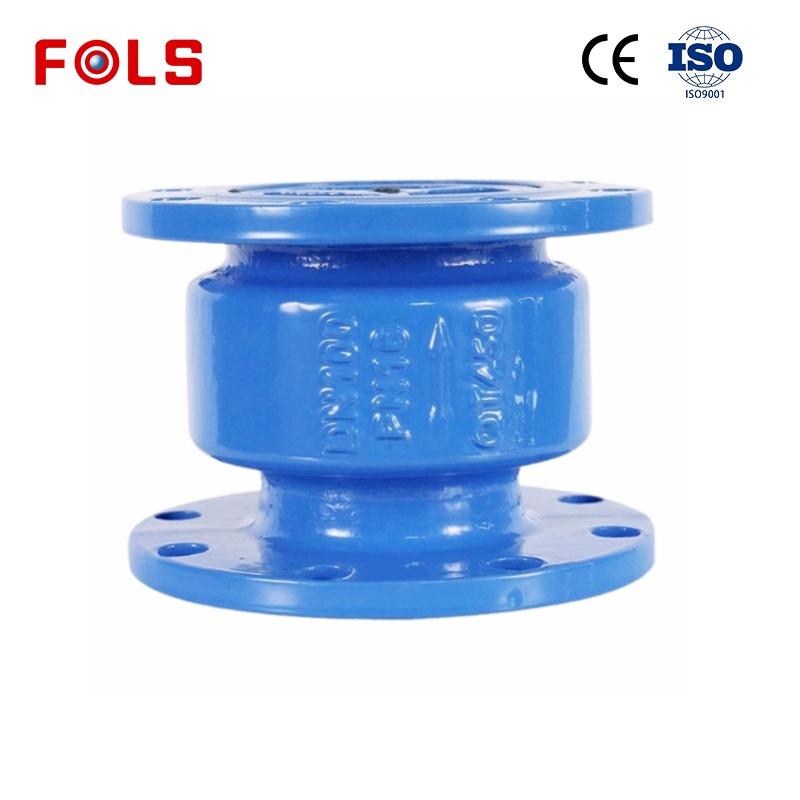
A sewer check valve serves a different function. It is intended to address reverse-flow behavior, while a Pneumatic Butterfly Valve is an actively commanded device. A sewer check valve does not replace an actuated isolation valve simply because both appear in drainage-related pipework. If both functions are needed, specify the flow direction, backflow concern, isolation sequence, and service-access plan separately.
Process skids, chemical handling, and utility lines
For process skids and utility headers, a Pneumatic Butterfly Valve may be evaluated where a controller must isolate branches in a sequence or where an operator needs a defined fail behavior. Chemical duty adds another level of review: the medium, concentration, temperature, pressure, body material, disc material, and seat material must be matched before a Pneumatic Butterfly Valve is approved. It is not enough to assume that a general-purpose configuration fits every process fluid.
In oil, chemical, and building-material operations, a Pneumatic Butterfly Valve can also be part of a larger shutdown or routing arrangement. The key question is whether the valve is being asked to shut off, modulate, or do both. For frequent throttling, confirm the control objective, actuator sizing, positioner or control accessory requirements, and the effect of disc position on the process. A Pneumatic Butterfly Valve used as a simple on/off device may need a different control package from one expected to hold intermediate positions.
Equipment connections and compact branches
A Pneumatic Butterfly Valve can be relevant on equipment connections when response time and remote operation matter, provided the pipe size and connection details are verified. For a small branch, a buyer may also be researching a 1.5 check valve. That phrase describes a separate non-return component category, not a substitute for a Pneumatic Butterfly Valve. A 1.5 check valve may be part of the protection or flow-direction design; the actuated butterfly valve may be the commanded isolation point. Treating them as interchangeable can leave the control sequence unclear.
Choose the actuator behavior before specifying the valve
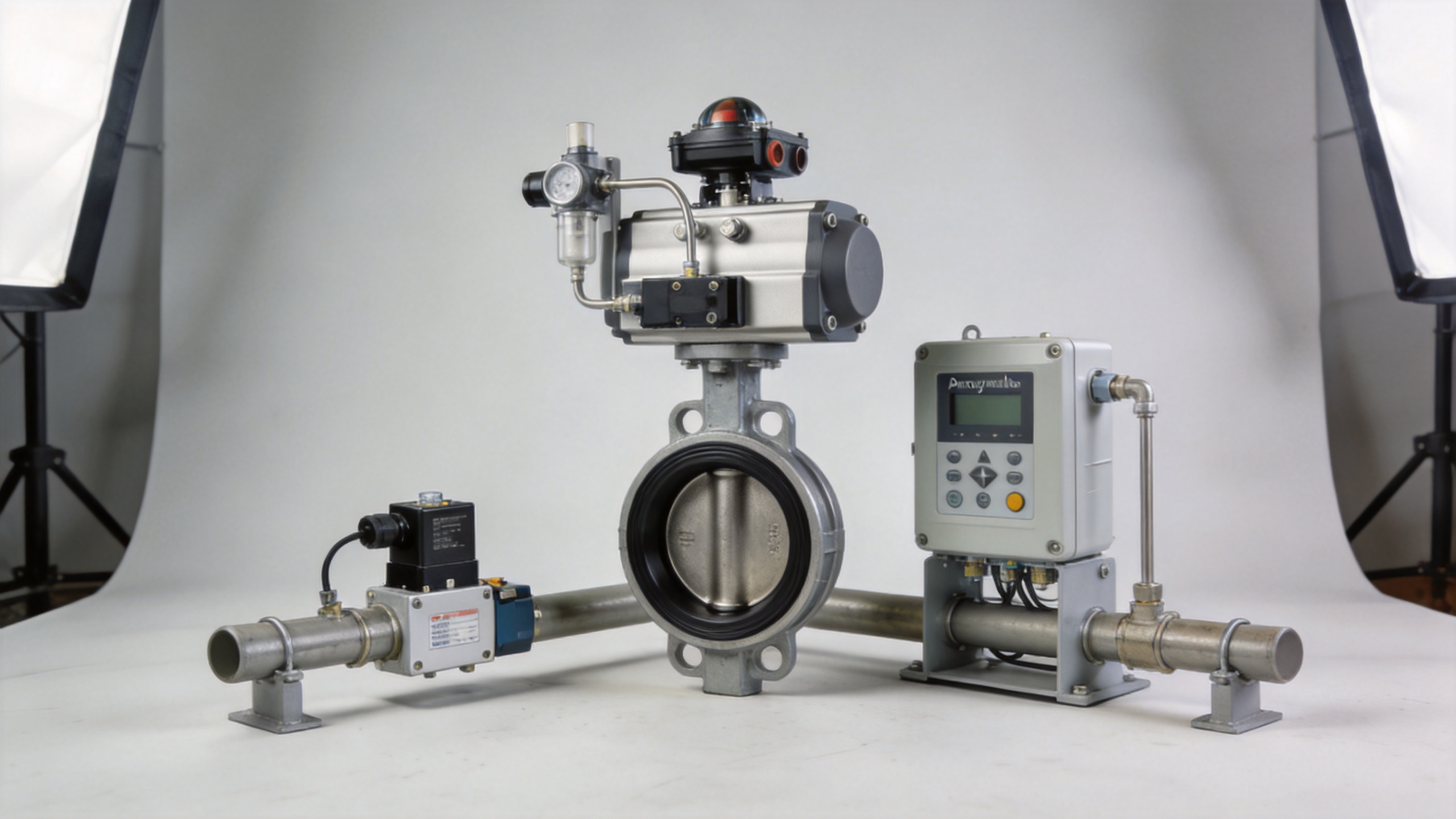
The actuator decision is central to every Pneumatic Butterfly Valve application. A double-acting arrangement uses air to drive both directions. A spring-return arrangement is considered when the required air-loss position must be defined. Neither option is universally right. Ask what the process should do if instrument air is unavailable, whether a closed or open position is expected, and whether local manual override or position feedback is required.
- On/off sequencing: Define the command signal, cycle frequency, and required confirmation of valve position.
- Fail-state planning: Record the desired air-loss position and verify it against the process risk review.
- Air supply: Confirm pressure, air cleanliness, moisture control, tubing, and available capacity at the actuator.
- Control integration: Clarify the solenoid specification, feedback switches, control voltage, and any position-control requirement.
- Maintenance access: Leave room to inspect the actuator, fittings, and linkage after installation.
These checks move the conversation from a product label to a workable Pneumatic Butterfly Valve control arrangement. They are also useful when a purchase team, engineer, and operator are each looking at the same line from different angles.
When another valve function should lead the decision
A Pneumatic Butterfly Valve is not the automatic answer to every fast-control question. If reverse-flow protection is the primary duty, evaluate the correct check-valve design first. If very fine control at particular operating points is the primary duty, review the control characteristics and the wider valve options against the process need. If the medium has unusual solids, abrasion, corrosion, temperature, or pressure conditions, a Pneumatic Butterfly Valve should be compared only after the materials and sealing arrangement are confirmed.
The same caution applies to a sewer check valve and a 1.5 check valve: size or application wording alone does not establish material compatibility, cracking behavior, orientation, or service suitability. Define the duty, then ask for the corresponding specification data. This approach reduces later clarification and makes the boundaries between isolation, regulation, and non-return functions easier to understand.
A practical inquiry checklist
Before requesting a Pneumatic Butterfly Valve configuration, prepare the following information:
- Medium, including solids, corrosiveness, and changes during operation.
- Line size, connection standard, pressure range, temperature range, and flow objective.
- Whether the Pneumatic Butterfly Valve is for on/off duty, controlled positioning, or an interlock sequence.
- Available instrument-air conditions and the required double-acting or spring-return behavior.
- Signal type, solenoid need, feedback need, local override, and air-loss position.
- Installation orientation, space for maintenance, and any companion check-valve function.
Guangzhou Fols Valve Technology Co., Ltd. can use this kind of condition list to discuss industrial valve and automation configuration directions. The final selection should be based on confirmed specifications and any documents required for the application. With the process conditions stated clearly, a Pneumatic Butterfly Valve becomes easier to place where fast, controlled quarter-turn action is genuinely useful.
 Hot News